10 Real Crowdfunding Case Studies | Lessons from Failures, Comebacks, Product Development, and Community Building
機械翻訳 / Machine-translated

When you search for crowdfunding success stories, you'll find plenty of projects that raised enormous amounts of support.
But I believe that looking at total funds raised alone doesn't reveal what truly matters.
Why did they launch that campaign in the first place?
What kind of preparation did they do?
When things weren't going well, how did they make decisions?
And how did they think about their relationship with the people who supported them?
I attempted my first crowdfunding campaign in 2017, and experienced a failure — raising roughly 30,000 yen against a goal of 1,000,000 yen.
After that, starting in 2018, I became involved in supporting crowdfunding campaigns and have helped with more than 150 projects.
This time, I've compiled 10 articles written from my own failures and real-world support experience organized by theme.
Feel free to start with whichever section interests you most.
A failure I experienced firsthand in 2017. I write about the difference between how I thought back then — when I believed support would simply come in once the campaign went live — and how I think about it now.
I examine crowdfunding outcomes from three perspectives: funding, the connections built with supporters, and the experience gained through the challenge itself.
A real example where we reconsidered the platform we had been preparing for. I write about the decision to prioritize the challenger's goals over my own interests.
A project I got involved with near its close, which ultimately achieved its goal. I introduce how to think about the situation when time is running short.
A campaign to create a hospice-style shelter for dogs. I write about why we took the time to build a network and develop a social media presence before going public.
A campaign to preserve Ontaki Chaya in Kobe. I reflect on how the desire to "keep it alive" becomes the reason supporters choose to get involved.
A campaign to age Okinawan whisky in the sea off Hokkaido. I introduce the value of participating in a future experience, not just receiving a finished product.
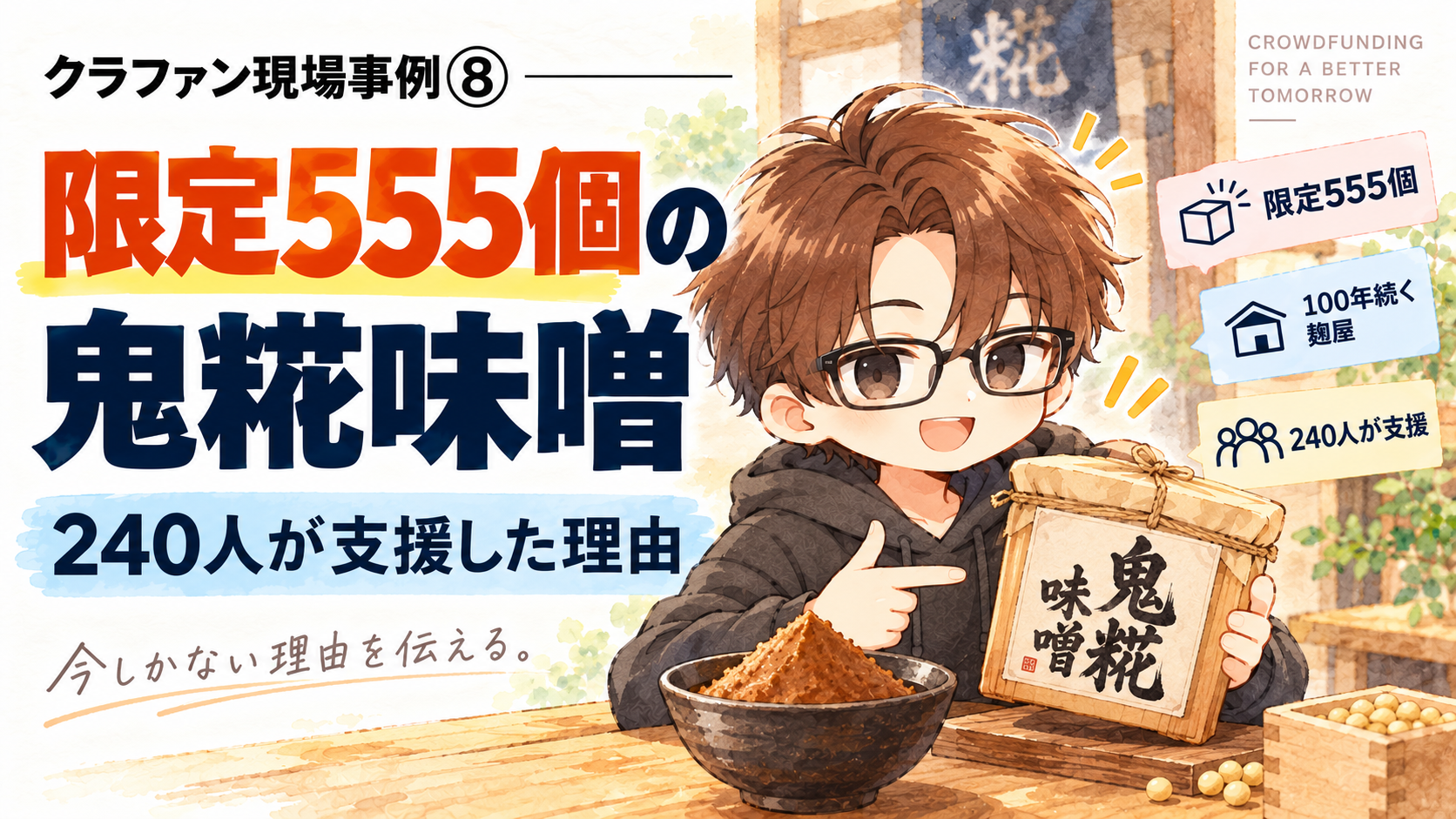
240 people supported a limited run of 555 jars of miso. I write about the importance of conveying the product's background and culture rather than relying solely on scarcity.
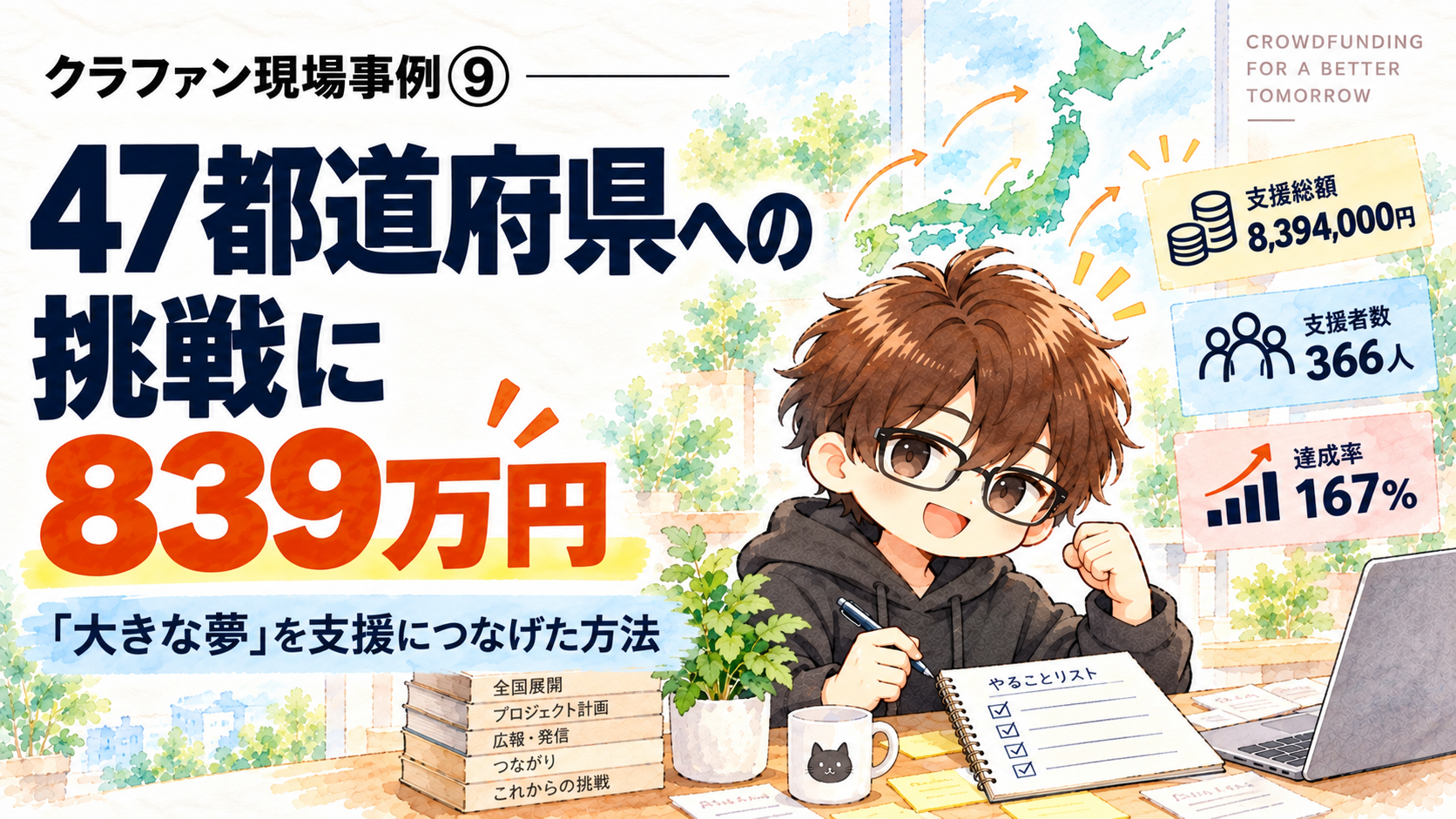
A campaign to expand a counseling salon nationwide. I introduce how to create entry points — participation, invitation, sponsorship — that allow supporters to get involved.
A campaign to build a BAR at Harukamura Campsite. I write about what lay behind achieving the first goal within 13 hours of launch, and the philosophy of growing both supporters and the place itself.
The campaigns covered span product development, community building, social initiatives, and more — each one different.
Some failed; others hit their targets in a very short time.
Even so, there is something consistent in what I value.
It is connecting "what you want to achieve" with "why a third party would want to support it."
And rather than searching for supporters after going public, it means building relationships with people who will cheer you on as early as possible — ideally before the campaign even launches.
Crowdfunding is not a system where money automatically flows in once a page goes live.
That is precisely why preparation, decision-making, and building relationships with supporters all matter so much.
I hope these 10 case studies serve as a useful reference for anyone planning to take on a crowdfunding challenge.
For Those Who Want to Run Their Own Crowdfunding Campaign
For those who want to learn the full process systematically — from planning and pre-launch preparation to post-campaign follow-up — I have also prepared a comprehensive 12-chapter practical course.
View the Self-Guided Crowdfunding Practical Course
If you'd like to consult individually, please check my profile page.