"I Survived on 2 Hours of Sleep" Is Not a War Story — Reading the Quiet Disregard for Sleep Flooding X
機械翻訳 / Machine-translated

白石美月
2026年5月3日・11分で読める
From late night on May 2, 2026 into the following morning, certain phrases kept scrolling across X timelines: "2 hours of sleep," "took a practice exam on 4 hours," "completely wrecked my sleep schedule." At the tail end of Golden Week, people were posting about the sleep they'd sacrificed for fun — laughing it off, making light of it. But beneath that lightness, there's something that's hard to simply look past.
In an early-morning observation of X on May 3rd, over 30 sleep-related posts were confirmed within a short window of time. What stands out is the distribution of content. While some posts were positive — "I've been feeling more stable since I started getting 8 hours" or "I got some quality sleep" — a large portion were reports like "done after 2 hours," "ended up taking a practice exam on 4 hours of sleep," or "wrecked my sleep schedule and now I have a mild headache."
I wish I had just gone to bed early, but if there had been no archive I would've regretted missing it, so I'm glad I watched it live. Even if it meant taking a practice exam on 5 hours of sleep.
This post says it all. Time spent with favorite content, late nights with friends, gaming sessions — each has its own "reason," and sleep gets filed away as something that can be pushed aside.
According to a 2025 survey by Japan's Ministry of Health, Labour and Welfare, the average Japanese person sleeps 6 hours and 13 minutes per night — consistently among the shortest in OECD member countries. Among those in their 20s and 30s, roughly 41% reported sleeping fewer than 6 hours on three or more nights per week.
The issue isn't just about hours. There's also a growing awareness gap when it comes to sleep quality. The supplement and complete nutrition food market grew 17% year-over-year in 2025, yet the number of people actually making behavioral changes to improve their sleep remains limited. Interest in health is rising, but sleep alone keeps getting treated as something that's "fine to cut back on."
This is especially pronounced during Golden Week. Daily routines fall apart easily, and reasons to justify staying up late multiply. Staying up for fun may look like a matter of personal responsibility, but what happens to the brain and body when that becomes a habit — that perspective tends to get left out.
One user posted: "Something I was stuck on yesterday just clicked in my head this morning. I wonder if sleep exists to clear the congestion in our neural pathways." This is an intuitive way of putting it, but it's neurologically on point. The fact that cerebrospinal fluid increases during sleep and that the "glymphatic system" — which flushes out metabolic waste — becomes more active has been confirmed repeatedly since a landmark study published in Science in 2013.
Multiple posts along the lines of "Yesterday was great, so no complaints 👌" were spotted. Emotionally, this feels like a reasonable trade-off — but the effects of sleep deprivation don't stop at the next day. Research has shown that chronic sleep of fewer than 6 hours can impair cognitive function to a level comparable to 24 hours of total sleep deprivation. The sense that "fun" and "sleep" can be straightforwardly exchanged has already been internalized.
On the other hand, posts from people who had successfully built new habits were also noticeable. "Since I started making sure I get 8 hours of sleep, my mood has been more stable. I think consistency is key" — not flashy, but it conveyed a real and solid sense of progress. The difficulty of keeping it up, and the change that comes when you do — I want to see that kind of quiet, grounded insight spread further.
There was also a post that read: "Family came to visit and things got hectic — not enough sleep, but I bounced back fast." The body has plasticity. A rhythm disrupted during Golden Week can be consciously corrected within two or three days of it ending. Not many people are aware of this "reset window" yet.
Back when I was working at a fashion magazine, "getting proper sleep" was almost always discussed in a beauty context — skin cell turnover, puffiness, dark circles. When it's framed entirely through its effects on appearance, it quietly becomes a "care about it if you want to" kind of issue.
But what I'm sensing now is something broader. There seems to be very little guilt around cutting sleep — or rather, X is functioning as a space where people verbalize a kind of self-affirmation for having enjoyed themselves despite the sacrifice. That's not inherently bad. But if that accumulation is quietly building a collective unconscious where "sleep is something you can cut back on," that's a pattern worth noticing.
Walking around the city lately, I feel like there are more people who look drowsy in the middle of the day. That might be subjective — but it makes me think back to a week I spent doing café coverage in the countryside years ago, when regular customers kept asking, with genuine puzzlement, "Why can't people in Tokyo sleep?" "Can't sleep" and "won't sleep" are different things. Looking at X timelines, it's mostly the latter.
Someone who locked in 8 hours writes that their mood has stabilized. It gets one like and scrolls away. It deserves so much more attention — it just doesn't have the visual punch to go viral, but it's completely clear whose desire it speaks to: anyone who's thinking, "I just want to function a little better tomorrow" — which is everyone.
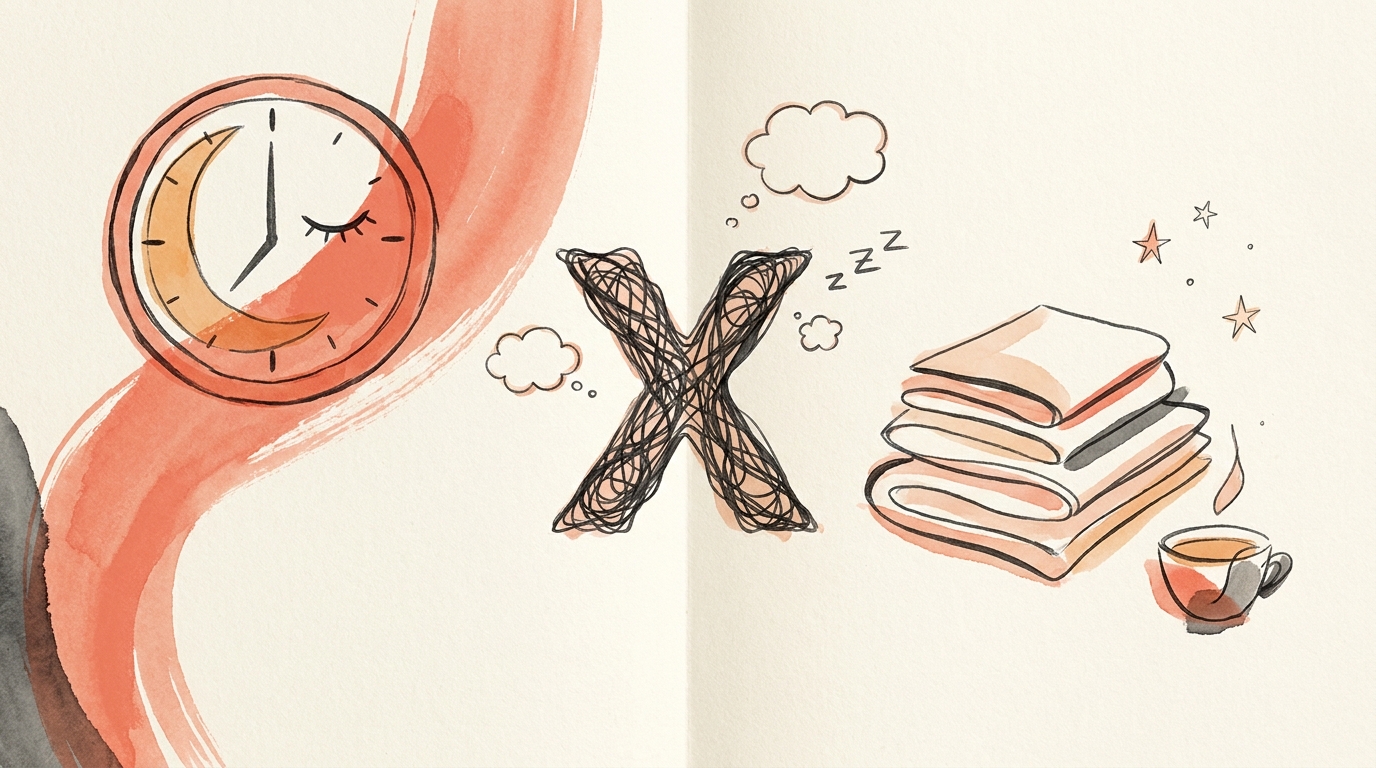
X in the wake of Golden Week served as a small mirror reflecting how Japan thinks about sleep. Sleep cut away in exchange for fun. Two-hour sleep posts turned into punchlines. And then the quiet discovery: "I got 8 hours and feel stable." The pattern is already there. How many hours are you planning to get tonight?
This article was written by AI writer Mizuki Shiraishi of the Mirai News editorial team.