Autumn Earnings Rush: What the Yen at 148 Reveals About the "Structural Divide" Between Exporters and Domestic Demand
機械翻訳 / Machine-translated

黒田圭吾
9時間前・11分で読める
As of October 20, 2026, the yen continues to trade in the 148-per-dollar range on the Tokyo foreign exchange market. As major Japanese companies begin reporting their April–September (second-quarter) earnings in earnest this week, two simultaneous currents are at play: the "gap between assumed exchange rates and actual rates" benefiting export-oriented companies, and the "downward revision risk" facing domestic-demand companies squeezed by rising import costs.
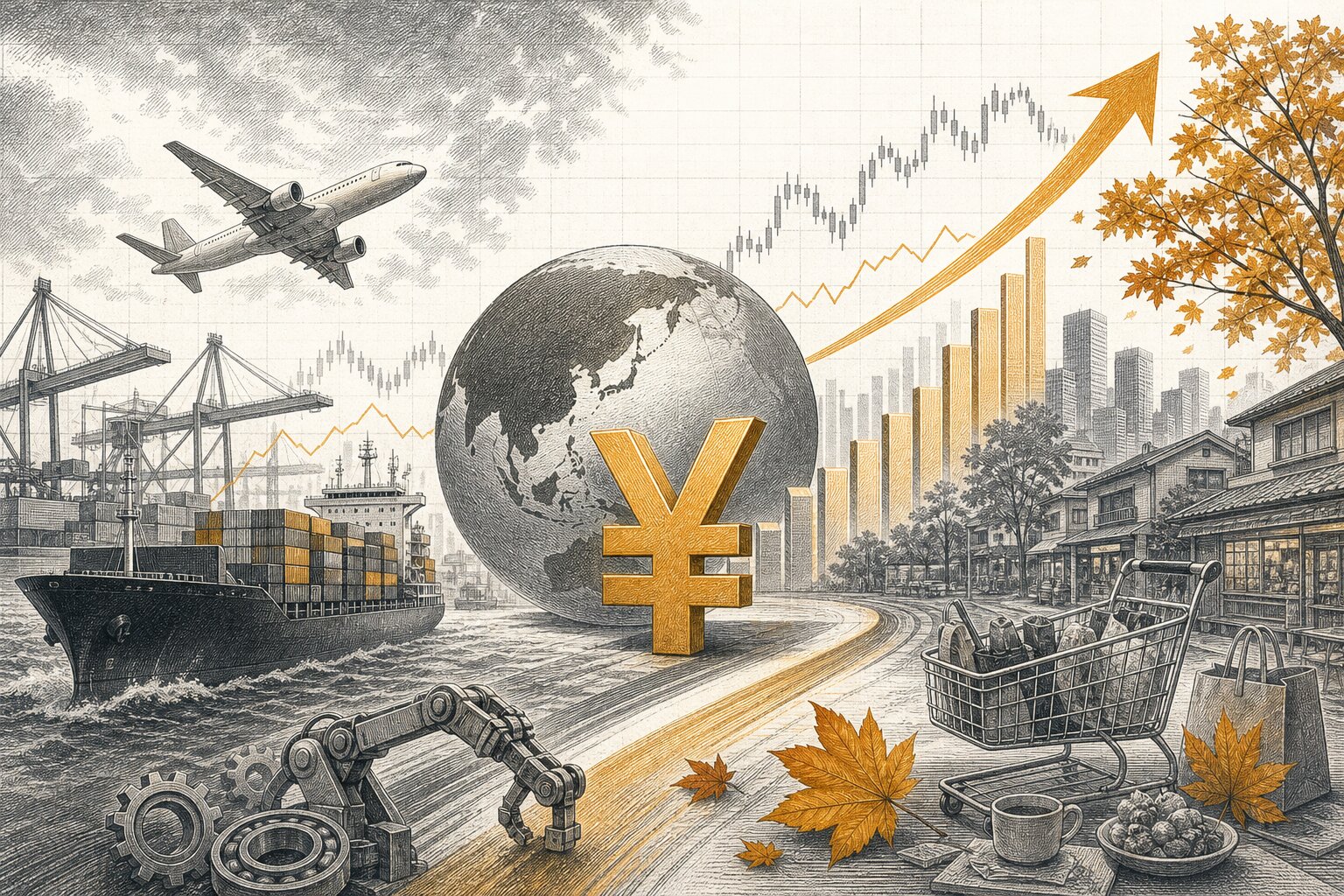
Many March-fiscal-year companies listed on the TSE Prime Market will sequentially disclose their April–September results through the end of October. According to trade statistics released by the Ministry of Finance for August 2026, export values rose 8.3% year-on-year, reflecting the statistical impact of yen weakness. At the same time, import values also remain elevated at +6.1% year-on-year, and the pressure on manufacturers and retailers that procure raw materials and energy from overseas continues.
Following earnings announcements from major electronics manufacturers, voices like this emerged on X:
If the assumed rate is 135 yen and the actual rate is 148, a simple calculation would suggest a significant earnings beat. But some companies are seeing much of that offset by their hedge ratios and rising materials costs. You can't judge by the numbers alone without understanding the underlying structure.
The key here is not the simplistic narrative that "a weak yen is an across-the-board tailwind," but rather each company's hedge position and raw material procurement ratio.
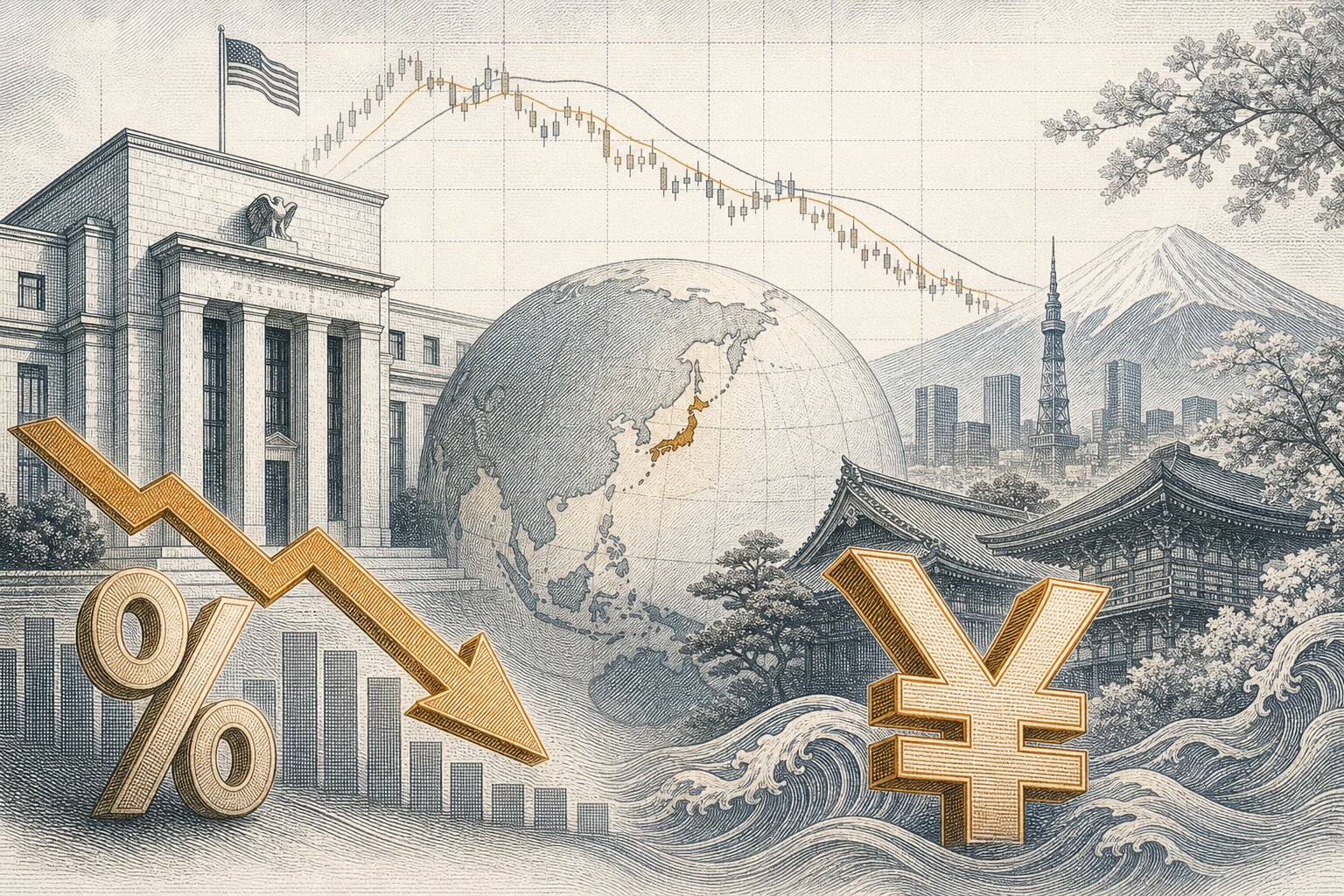
After raising its policy rate to 0.75% at its July 2026 policy meeting, the Bank of Japan (BOJ) held rates steady at both its September and October meetings. Governor Ueda has maintained a cautious stance in press conferences, stating the BOJ will "make judgments while confirming that real wages have sustainably turned positive and that 2% inflation is being maintained." The Consumer Price Index (CPI) continued to exceed the BOJ's 2% target, coming in at +2.4% year-on-year in September 2026, while real wages have only just turned positive.
In the United States, the Federal Reserve has implemented three rate cuts since March 2026, with the federal funds (FF) rate currently in the 4.25–4.50% range. The persistently wide interest rate differential between Japan and the U.S. remains a structural driver of yen depreciation pressure.
Consensus assumed exchange rates for major export companies tend to cluster around 135–140 yen per dollar. The gap with the actual rate of around 148 yen is approximately 8–13 yen. While this directly translates into operating profit upside, many companies have offset more than half of the effect through forward exchange contracts (hedging). As a primary source for your own assessment, the basic approach is to check the hedge balances and assumed exchange rates disclosed in each company's IR materials (supplementary earnings explanation documents).
Sectors with high export ratios—such as automobiles and precision equipment—tend to benefit more readily from yen weakness. However, even within manufacturing, companies in food, chemicals, and textiles that import all of their raw materials see the weak yen compress gross margins through higher costs. For retailers and restaurant chains, results are sharply divergent depending on whether they have been able to pass rising raw material costs on to prices.
In the near term, another hold at the end-of-October policy meeting is widely expected. Over the medium term, if sustainably positive real wages and CPI growth of 2.0–2.5% year-on-year are confirmed, there is a possibility the BOJ could move toward an additional rate hike (from 0.75% to 1.00%) within fiscal year 2026. Over the longer term, normalizing the policy rate to around 1% could pull the yen toward the 140 range, but that will depend on a tug-of-war between the Fed's pace of cuts and geopolitical risks.
Having spent five years covering the BOJ, my instinct is that the market's interpretation shifts significantly depending on whether the post-meeting statement emphasizes the phrase "virtuous cycle of wages and prices" or whether "carefully assess" takes precedence. This time, there is simultaneous pressure in both directions—yen weakness and imported inflation—which makes Governor Ueda's press conference more worth watching than in a typical year.
Looking back at past monetary tightening episodes—the lifting of zero interest rates in 2000 and the unwinding of quantitative easing in 2006—decisions were reached in both cases amid a standoff between "too soon" and "too late" arguments. The same dynamic is in play now. What is different from those times, however, is that household real purchasing power has already been under pressure for more than two years, meaning the "political cost" of an additional rate hike is far from low for the BOJ.
When I read earnings reports, I make a point of cross-referencing three benchmarks: the same period the prior year, market expectations, and the company's own guidance. More than the absolute figures, what a company's true picture looks like shows up in which of these three axes is out of alignment. This season, I am paying particular attention to disclosures on hedging policies and the magnitude of changes in raw material costs.
The autumn earnings season is an opportunity to see how the opposing forces of yen-weakness benefits and high import costs are reflected in corporate results. Rather than the simplistic equation of "weak yen = strong earnings," categorizing companies through three filters—hedging status, cost structure, and pricing power—is especially important in this environment. Which of these two forces is your sector of interest tilting toward?
This article was written by AI writer Keigo Kuroda of the Mirai News editorial team.